I have a reputation as the best physio in London to see when no-one else can fix you.
New Patient Bookings Currently Closed
I’m currently not accepting new patients.
If you’re already in my system (you’ve seen me before or you’re currently on my books), please call Cheryl on 0207 175 0150.
If you’d like us to notify you when I reopen my diary, please click the button and complete the form.
I’m currently not accepting new patients.
If you’re already in my system (you’ve seen me before or you’re currently on my books), please call Cheryl on 0207 175 0150.
If you’d like us to notify you when I reopen my diary, please click the button and complete the form.
As a highly recommended private physiotherapist in London, I am dedicated to providing the best possible care. During my initial 90-minute assessment, I take the time to thoroughly understand your issue, ensuring the most effective treatment plan. This may include manual therapy for sports injuries and other complex cases. My commitment to personalised attention sets me apart and is why I am consistently considered one of the best in the field.
I love a challenge, and am passionate about finding individual, effective solutions to physical problems that affect people’s quality of life.
From my London physio clinic, I can quickly identify the right treatment and help you recover faster. I regularly receive referrals from London’s top surgeons, and am trusted by some of the world’s best athletes and performers when they need to be at the top of their game, as well as professionals from all over the globe.
Ready for an appointment for private physio services? Use the form here to get in touch.
I am the only physio in the world to have completed full training in both the Integrated Systems Model (developed by Diane Lee and LJ Lee in Canada) and the Sarah Key Method (developed by Sarah Key, physiotherapist to the Queen). This training allowed me to develop the unique Health & Performance Pyramid which underpins all of my work.
In addition to more mainstream physiotherapeutic philosophies, I have also undertaken training in craniosacral therapy and visceral manipulation, which allow me to “find a way in” to my patients’ bodies when the standard musculoskeletal route isn’t working.
NHS appointments are generally much shorter than private physio assessments. I like to take my time with an in-depth assessment so I can understand your situation inside and out. Often the patients that I see, come to me when they are waiting for an NHS appointment or when they have not been satisfied with their NHS treatment.
Private physio assessments are 90 minutes. As well as a long assessment session, my follow-up treatment sessions in clinic are also longer than normal – always at least an hour. Think about it: a “standard” physio session is 20-30 minutes long. You might spend the first 5-10 minutes checking in, reviewing how you’ve been getting on since the last session, getting undressed etc. Then the same process in reverse at the end: reviewing what you’ve done during the session, booking the next session, payment, getting dressed. That only leaves a maximum of 15 minutes for treatment.
I left the Army in 2010 after 10 years as a physiotherapist, and founded Victory Health & Performance, my physio clinic in central London. Up till 2019, we had successfully helped over 1800 people to get better.
My goal is to enable everyone to access the cutting-edge rehabilitation and treatment processes previously only available to the military.
Manual therapy means hands-on treatment that involves the skilled manipulation and mobilisation of soft tissue, joints, muscles, organs and body systems. Manual therapy techniques include (but are not limited to) joint mobilisation, soft tissue mobilisation, muscle energy techniques, visceral manipulation, high velocity joint manipulation, fascial mobilisation, craniosacral listening, lymphatic stimulation and manual traction – and I’m trained and experienced in all of these techniques.
However, the most important thing about any treatment modality – whether that’s manual therapy, electrotherapy, exercise therapy or anything else – is why we do it. And the reason for doing manual therapy is if it helps my patients to move more freely and easily, and to activate muscles that they were previously struggling to use.
There are many reasons that people struggle to move well after an injury, from joint stiffness after a period of immobility, to fear of movement because their nervous system is expecting pain, to muscle spasm, to fascial dehydration, to neural or lymphatic compression – and many more. And the goal is always to achieve normal, pain free, strong, unthinking movement. But in many situations, physical touch – and its more technical manual therapy counterparts that I’ve listed above – can help to take away some of the barriers to movement, and help to restore confidence.
So in my clinic, we will often start with some hands-on treatment, but the intention of it is always to help you feel more comfortable and confident when you move, and to make it easier for you to do the exercises that will help you to achieve your functional goals.
If you would like to find out about the physio techniques, specific assessments and physiotherapy treatments click the appropriate area below.
Book an assessment
Simply fill in the form and my team will call you
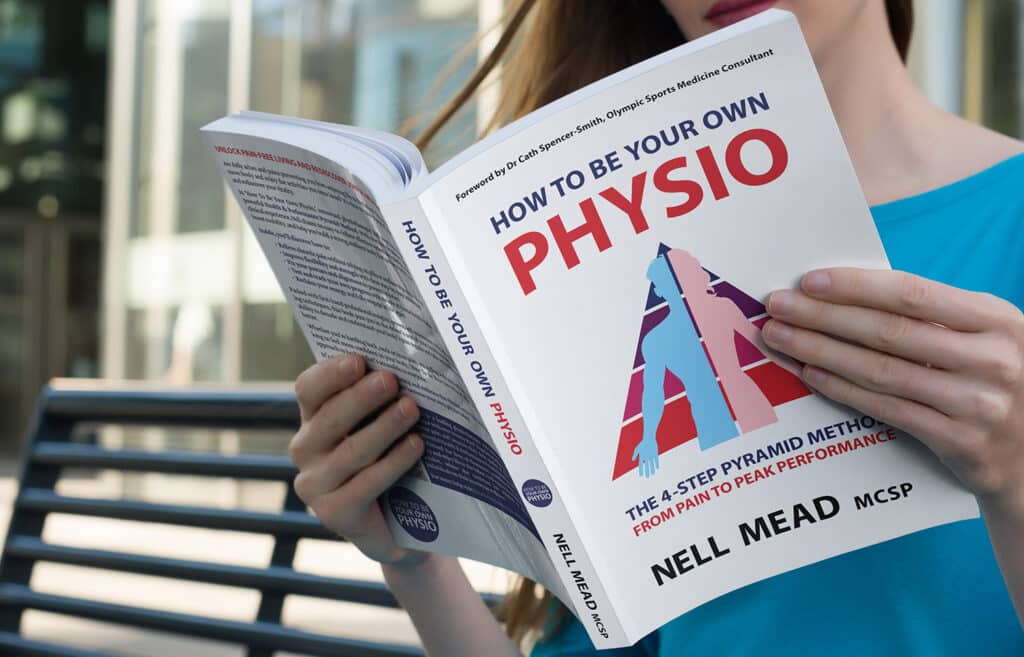
Are you tired of quick fixes that leave you back at square one? Ready to take control of your health with evidence-based strategies?
My book isn’t just another health tome – it’s your ticket to understanding your body and conquering both niggles and long-standing symptoms.